

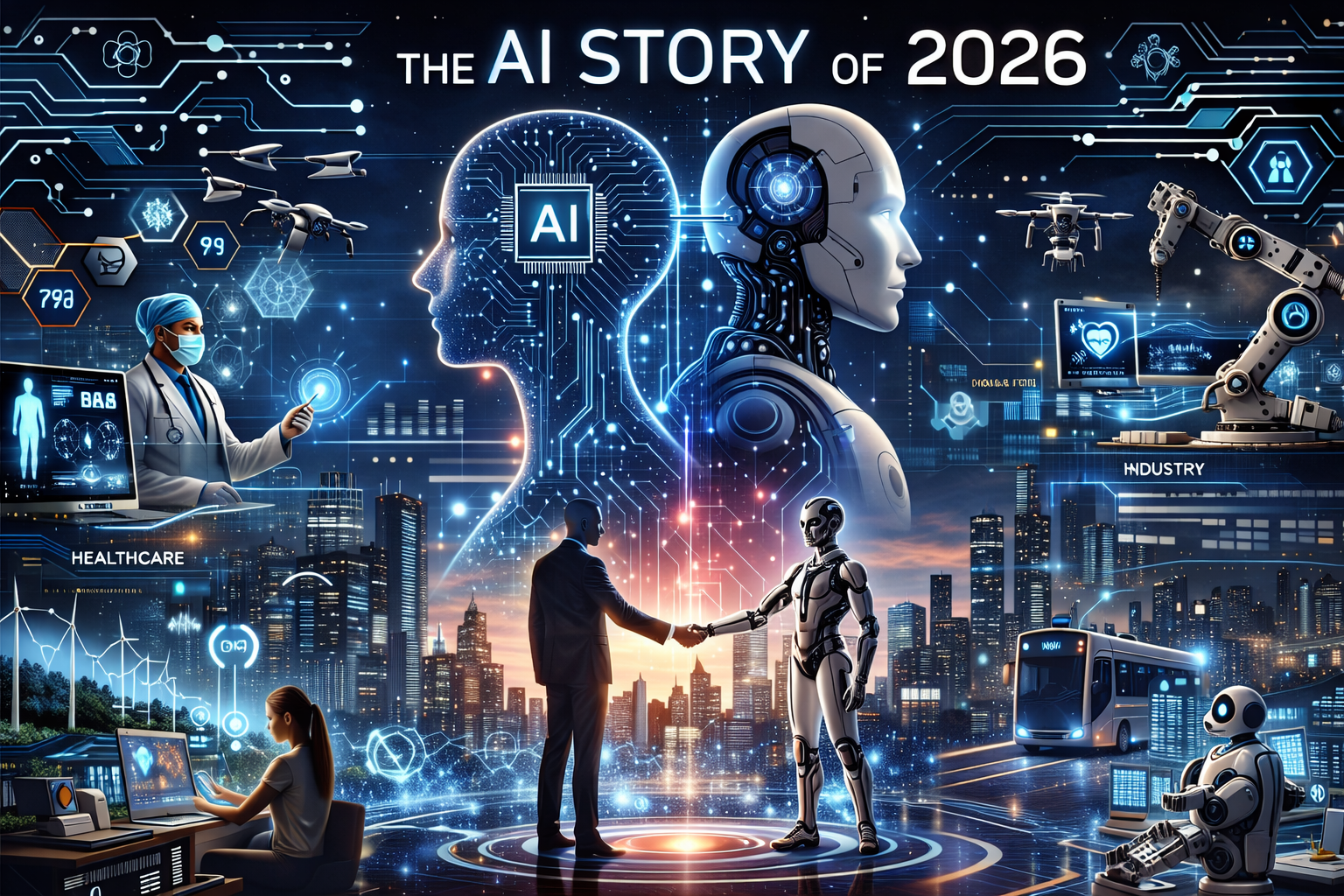
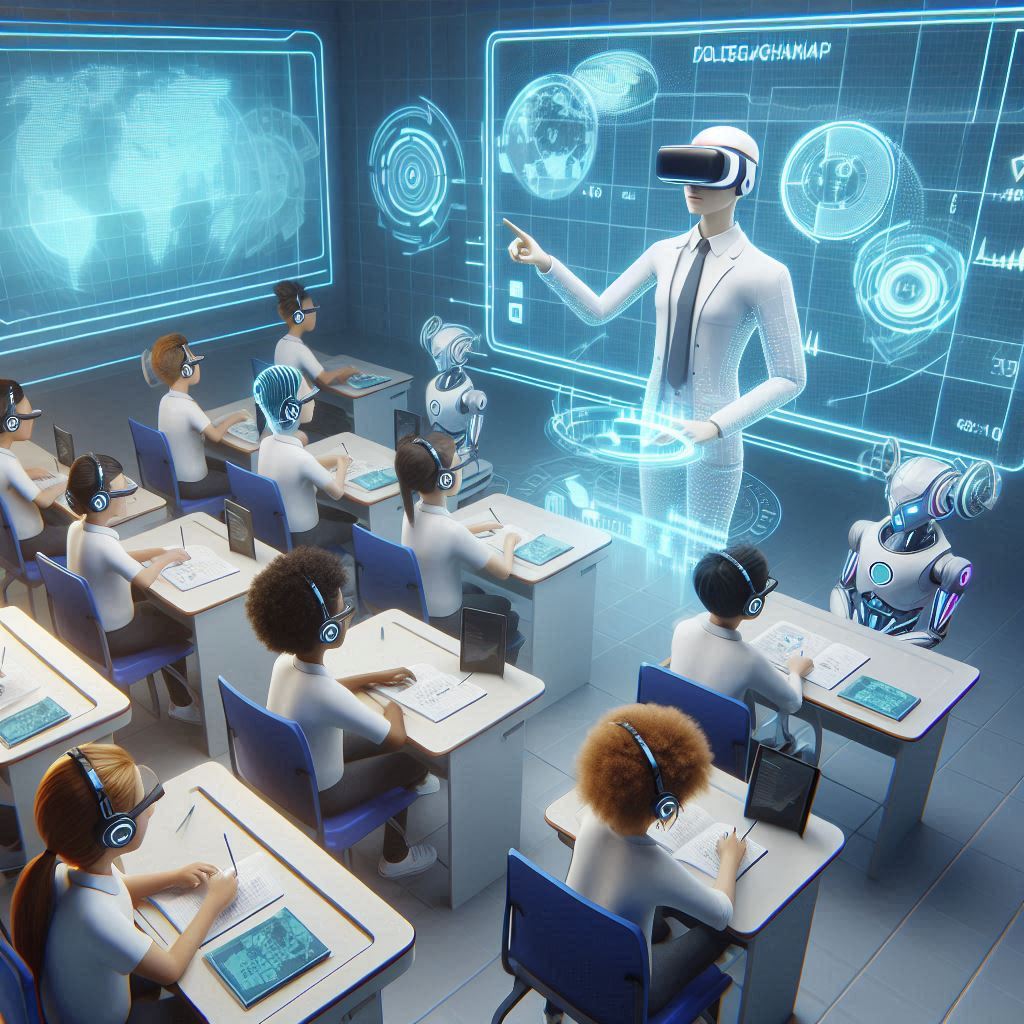
Artificial Intelligence has already become a powerful force in the modern world, but by 2026 its role is evolving in a new direction. Instead of replacing humans, the most important trend in AI today is collaboration between humans and intelligent machines. This partnership is creating a new era where technology enhances human creativity, productivity, and problem-solving abilities.
Unlike earlier technological revolutions that focused mainly on automation, the AI revolution is about augmentation—making humans smarter, faster, and more capable.
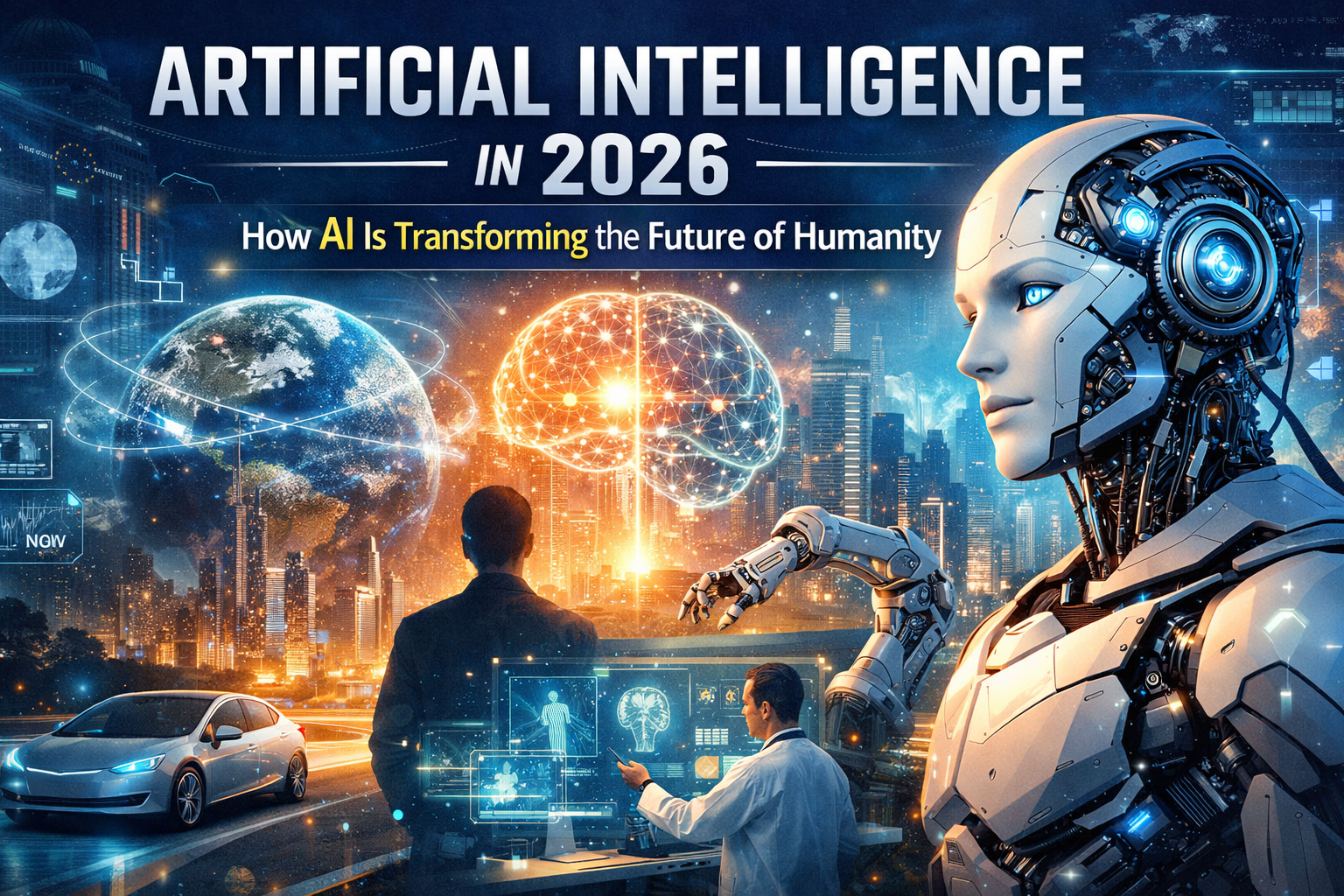
For many years, people feared that AI would take away jobs and replace human workers. While automation does replace some repetitive tasks, the real transformation happening in 2026 is the rise of Human–AI teamwork.
In this model:
Together they create outcomes that neither humans nor machines could achieve alone.
For example, architects now use AI systems to generate hundreds of building design possibilities within minutes. The architect then selects and refines the most innovative design
One of the most surprising developments in AI is its growing role in creativity. AI is no longer limited to technical tasks; it is now assisting in artistic and creative work.
Writers use AI tools to brainstorm ideas, musicians experiment with AI-generated melodies, and filmmakers explore AI-assisted visual effects.
However, AI does not replace creativity—it amplifies human imagination. Artists remain the visionaries, while AI acts as a powerful tool that expands creative possibilities.
In 2026, AI is also becoming a decision-support system for governments, businesses, and scientists.
AI can analyze enormous amounts of global data in seconds and provide insights that help leaders make smarter decisions.
Examples include:
These systems do not make decisions independently; instead, they guide human decision-makers with accurate data and predictions.
The workplace of 2026 looks very different from the past. Instead of traditional jobs disappearing completely, many roles are evolving into AI-assisted professions.
New types of jobs are emerging, such as:
The most valuable skill in the future will not be competing with AI but learning how to work alongside it effectively.
As AI becomes more powerful, ethical responsibility becomes more important. Developers, governments, and organizations must ensure that AI systems are fair, transparent, and accountable.
Important ethical principles include:
In 2026, many countries are introducing regulations to ensure that AI is used responsibly and for the benefit of society.
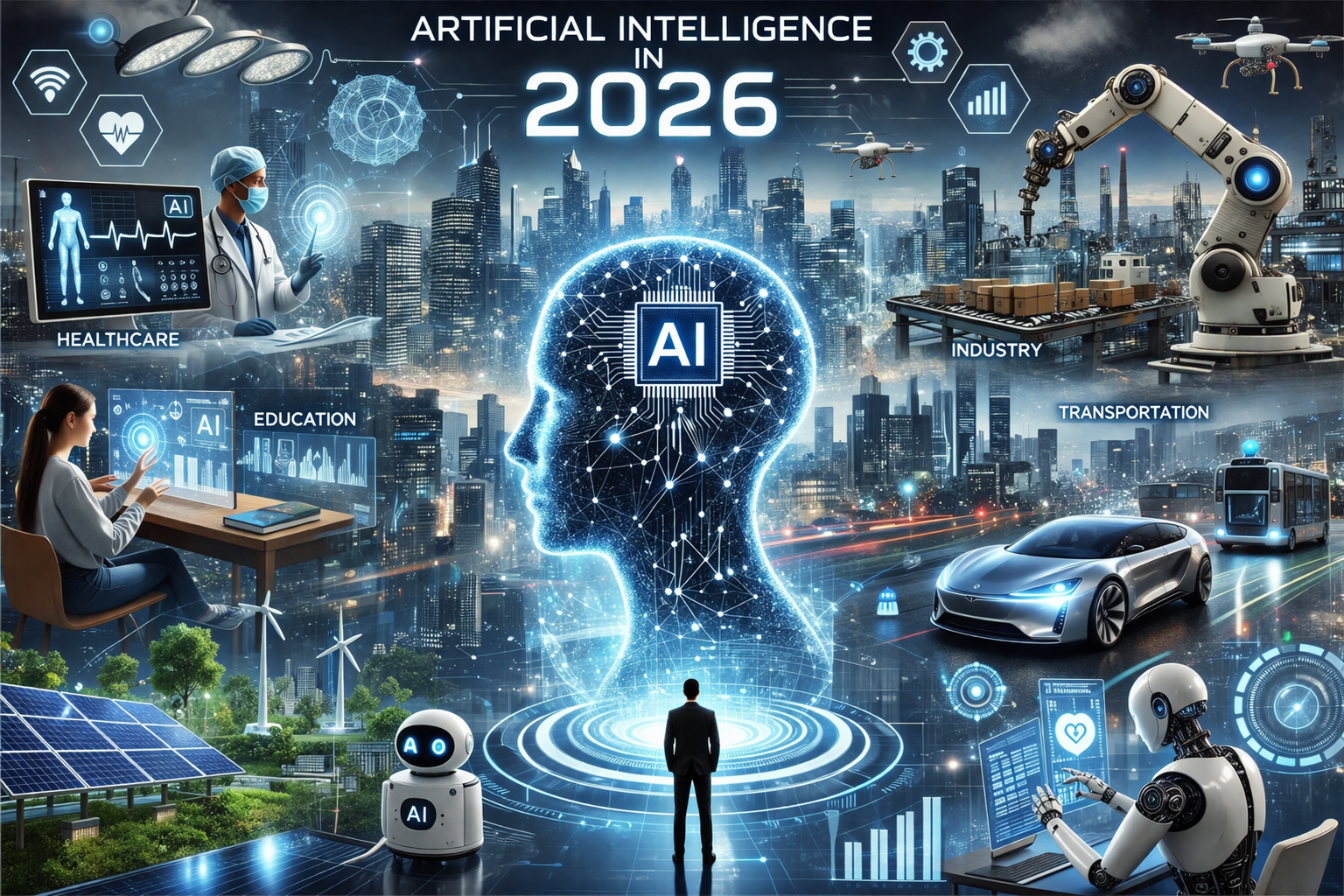
The future of AI is not about machines dominating humanity. Instead, it is about combining the strengths of human intelligence with the power of artificial intelligence.
Humans excel at:
AI excels at:
When these strengths are combined, the result is a powerful partnership that can solve global challenges and drive innovation.
Artificial Intelligence in 2026 represents more than just technological progress—it marks the beginning of a new relationship between humans and machines. Rather than replacing people, AI is becoming a collaborator that enhances human potential.
The future will belong to those who learn to embrace AI as a partner, using it to create smarter solutions, stronger economies, and a better world.









Welcome to Vidyamandirias